
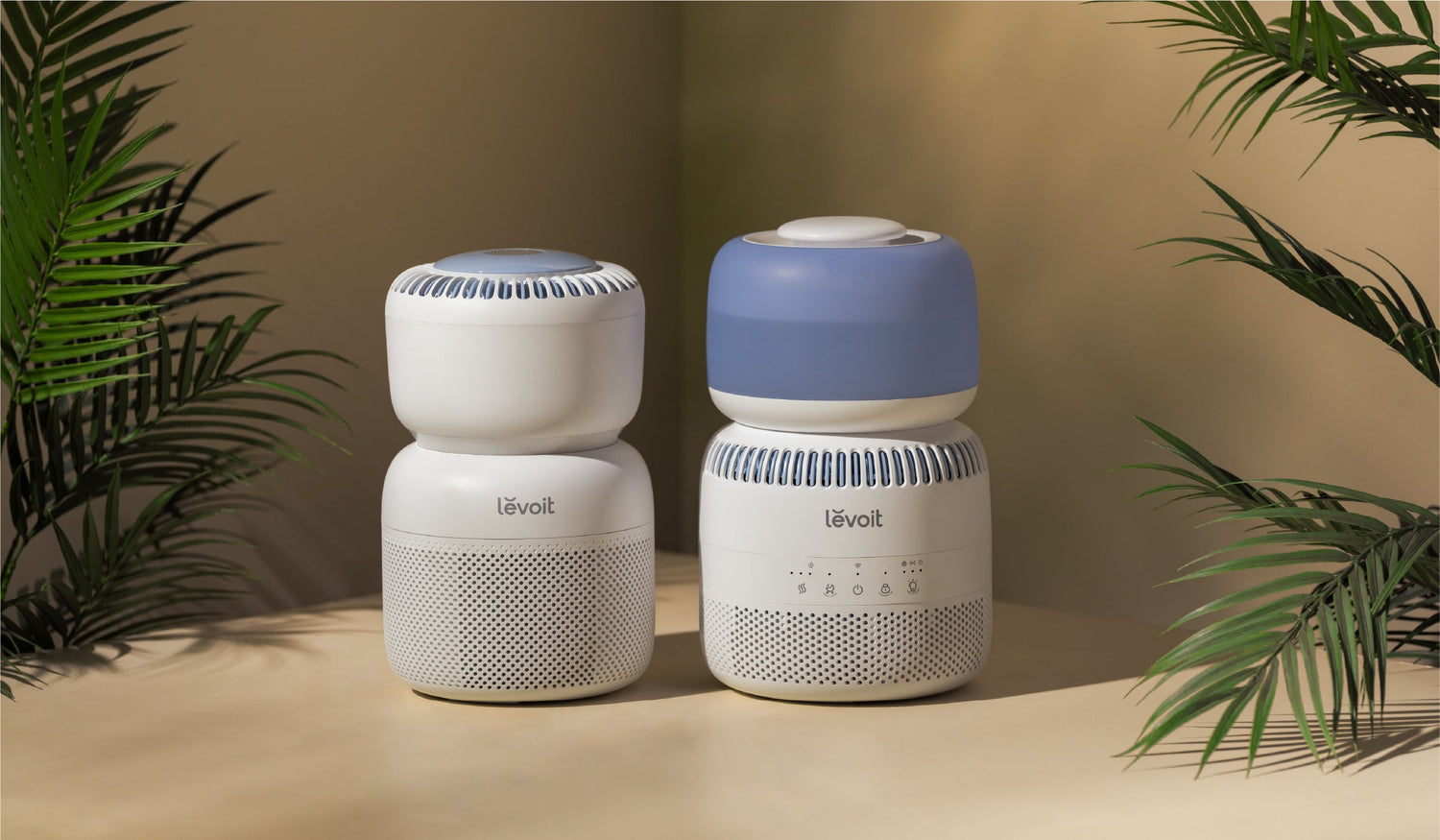
Air purifiers and humidifiers are often confused, but they solve very different indoor air problems. While both can improve comfort at home, one focuses on cleaning the air, and the other on adding moisture.
So, how do you know which one you need, and does it make sense to use both?
This guide breaks down how air purifiers and humidifiers work, what problems they solve, and how to choose the right option for your home, family, and even your pets.
Air Purifier vs. Humidifier: What’s the Difference?
What Does an Air Purifier Do?
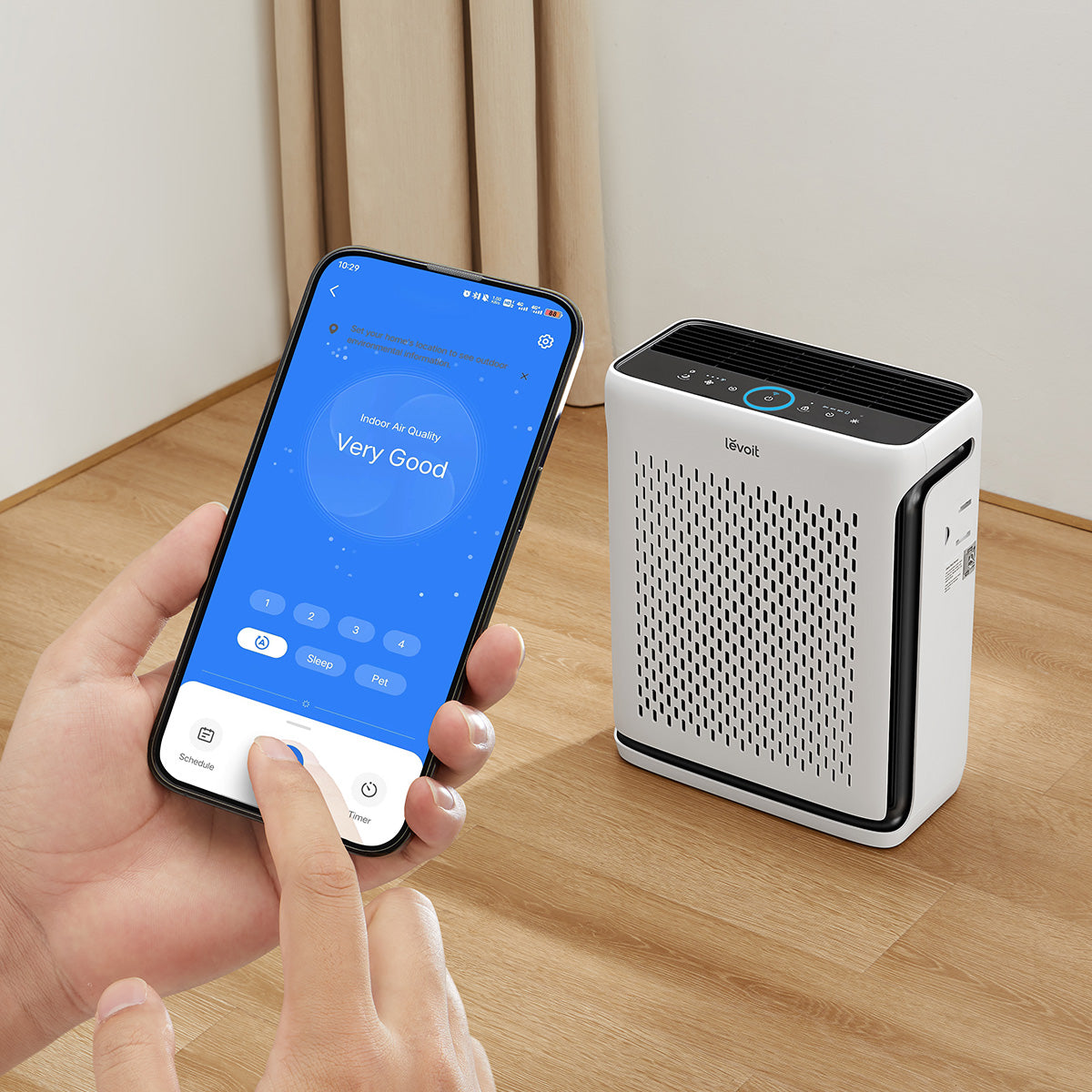
An air purifier’s primary role is to clean the air by removing airborne pollutants such as dust, pollen, pet dander, smoke, and odors.
Primary Function:
Air purifiers reduce indoor air pollution by filtering allergens and fine particles, making them especially helpful for people with allergies, pets, or air quality sensitivity.
How Air Purifiers Work:
Most air purifiers use multiple layers of filtration to trap pollutants as air passes through the unit. For example, many models from Levoit use a combination of:
- Pre-Filter: Captures large particles like hair, lint, and pet fur, helping extend the life of the main filter.
- Main Filter: Captures up to 99.97% of particles as small as 0.3 microns, including dust, pollen, pet dander, and smoke.
- Activated Carbon Filters: Remove odors, volatile organic compounds (VOCs), smoke, and pet smells.
Key Benefits of Air Purifiers:
- Improved Air Quality: Air purifiers help eliminate allergens and pollutants from the air, improving overall air quality.
- Reduce Allergens: By removing airborne allergens like pet dander, pollen, and dust, air purifiers can reduce allergens.
- Remove Lingering Odors: Activated carbon filters can effectively eliminate odors from cooking, pets, smoke, and more, leaving your home smelling fresh.
Research shows that air purifiers can significantly reduce indoor airborne particles, especially in environments affected by outdoor pollution such as smoke or traffic emissions. This highlights their role in improving indoor air quality and reducing exposure to fine particles. especially in environments affected by outdoor pollution such as smoke or traffic emissions. This highlights their role in improving indoor air quality and reducing exposure to fine particles.

What Does a Humidifier Do?
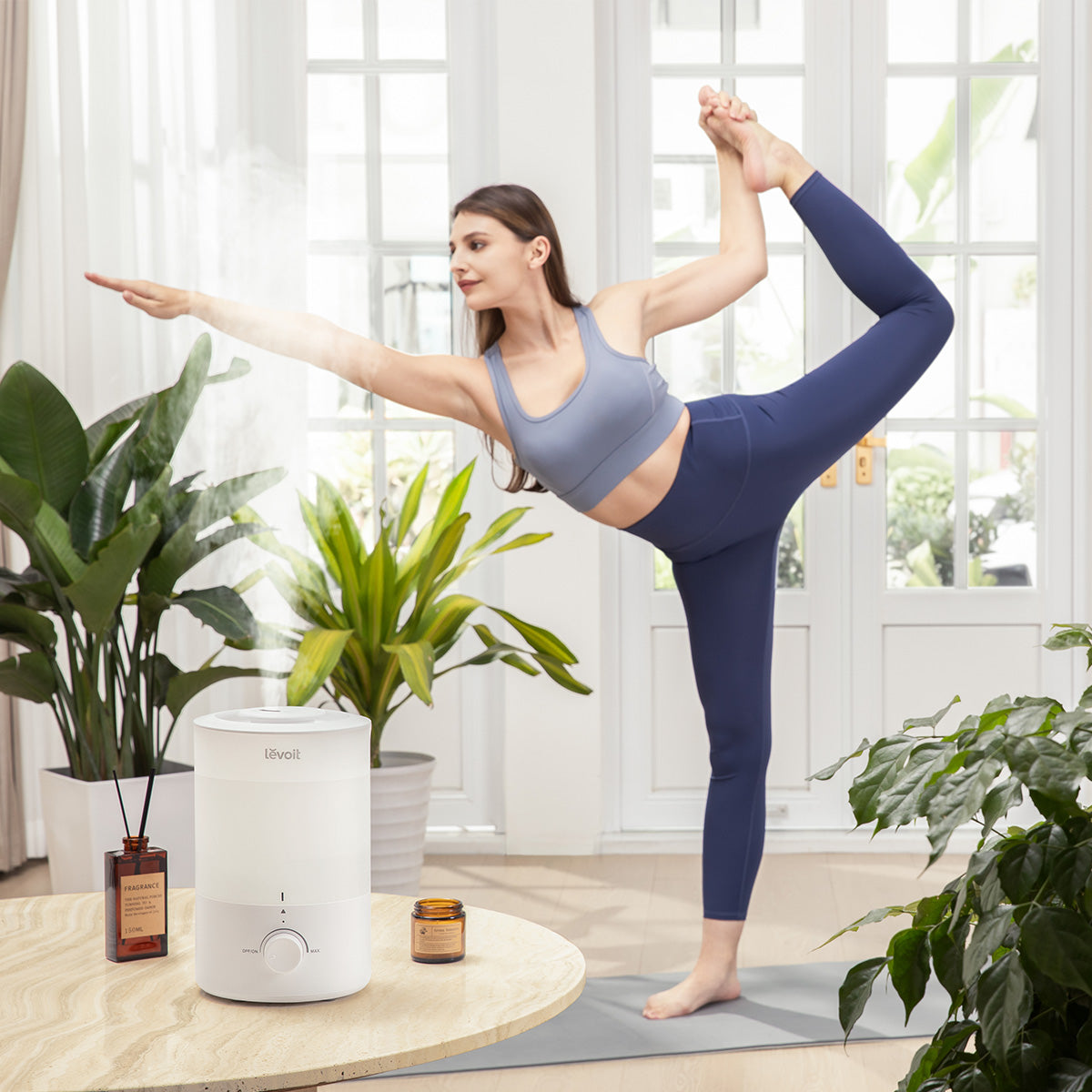
A humidifier doesn’t clean the air, rather it’s designed to add moisture to it. This is especially useful in dry climates or during colder months when heating systems lower indoor humidity.
Primary Function:
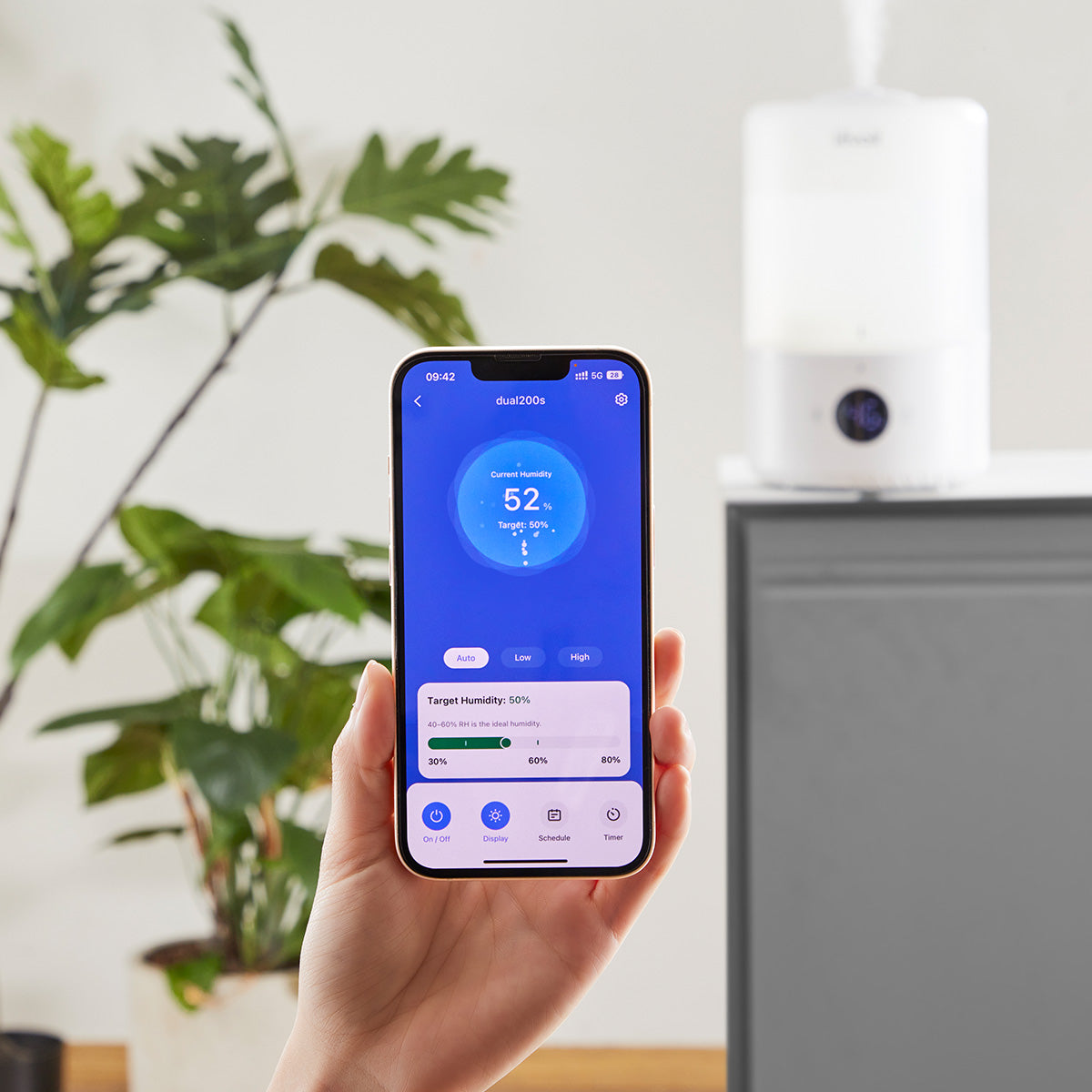
Humidifiers increase indoor humidity levels, helping maintain a comfortable range between 30– 50%.
How Humidifiers Work:
Humidifiers work by converting water into mist, vapor, or steam and releasing it into the air. Common types of humidifiers include:
- Evaporative Humidifiers: Use a wick filter and fan to release water vapor naturally and help prevent over-humidification.
- Ultrasonic Humidifiers: Use ultrasonic vibrations to create a fine mist. They are typically quiet and energy efficient.
- Steam Vaporizers: Heat water to create steam, which cools slightly before being released into the air.
Key Benefits:
- Help Maintain Skin Surface Hydration (SCH): Humidifiers keep the air moist, which may help relieve the physical discomforts of dry skin, lips, and nasal passages.
- Relieve Dryness Discomfort: Proper indoor humidity helps keep nasal passages moist and supports normal mucus clearance, which can reduce the physical discomforts associated with dry air.
- Protect Furniture & Plants: Maintains proper indoor humidity and helps prevent wooden furniture from drying out and cracking while allowing plants to flourish.
Scientific research shows that indoor humidity directly affects airway function and mucus clearance. Maintaining proper humidity can help reduce irritation and discomfort associated with dry air, especially during winter months. the air.

Air Purifier vs. Humidifier: Core Differences
Here are the core differences between air purifiers and humidifiers:
|
Feature |
Air Purifier |
Humidifier |
|
Primary Goal |
Remove pollutants from air |
Add moisture to air |
|
How It Works |
Filters contaminants |
Converts water to mist, vapor, or steam |
|
Effect on Humidity |
No impact |
Increases humidity |
|
Best For |
Dust, pet dander, pollen, smoke, poor air quality |
Dry air, winter |
|
Maintenance |
Replace filters as recommended (typically 6 months) |
Clean water tank weekly |
Should You Use an Air Purifier and Humidifier Together?
Yes, in the right situations, using both can be beneficial. Using both makes good sense in the following situations:
- Winter Months: Indoor air becomes dry while allergens and dust accumulate due to closed windows.
- Pet Owners in Dry Climates: One device reduces pet dander, and the other helps prevent dryness.
- Allergy-Sensitive Households: Clean air and balanced humidity improve overall comfort.
Key Tips for Using Both:
- Place them at least 3 feet apart to prevent moisture from affecting the air purifier.
- Monitor humidity levels and keep them between 30–50%.
- Clean both devices regularly to prevent mold or bacteria growth.
Air Purifier vs. Humidifier: Final Recommendations
Air purifiers and humidifiers address different needs, and choosing the right one depends on what’s affecting your indoor environment most, whether it’s air pollution or dryness.
- Choose an air purifier if allergens, pet dander, smoke, or odors are your main concern.
- Choose a humidifier if dry air is causing discomfort.
- Consider using both if you experience both dryness and reduced air quality, especially in winter.
FAQ
Can I use a humidifier for my baby?
Yes. A humidifier can help keep the air comfortable for babies, especially in dry environments. Evaporative humidifiers are often recommended for nurseries because they don’t heat water and help regulate humidity naturally.
Can I use a humidifier for plants?
Absolutely. Many indoor plants, especially tropical varieties, thrive in higher humidity. A nearby humidifier can help prevent dry leaf edges and support growth.
Do air purifiers help with allergies?
Air purifiers don’t cure allergies, but they can significantly reduce airborne allergens like pollen, dust, and pet dander.
Sources:
National Library of Medicine. "Relative Humidity and Its Impact on the Immune System and Infections"
The information provided here is for informational and educational purposes only and should not be used in medical emergencies or for diagnosing or treating any medical condition. It's crucial to consult a licensed medical professional for diagnosis and treatment. External links are for informational purposes and do not constitute endorsements. No warranty of any kind, either expressed or implied, is made as to the products and/or the accuracy, reliability, timeliness, or correctness of the information provided herein.